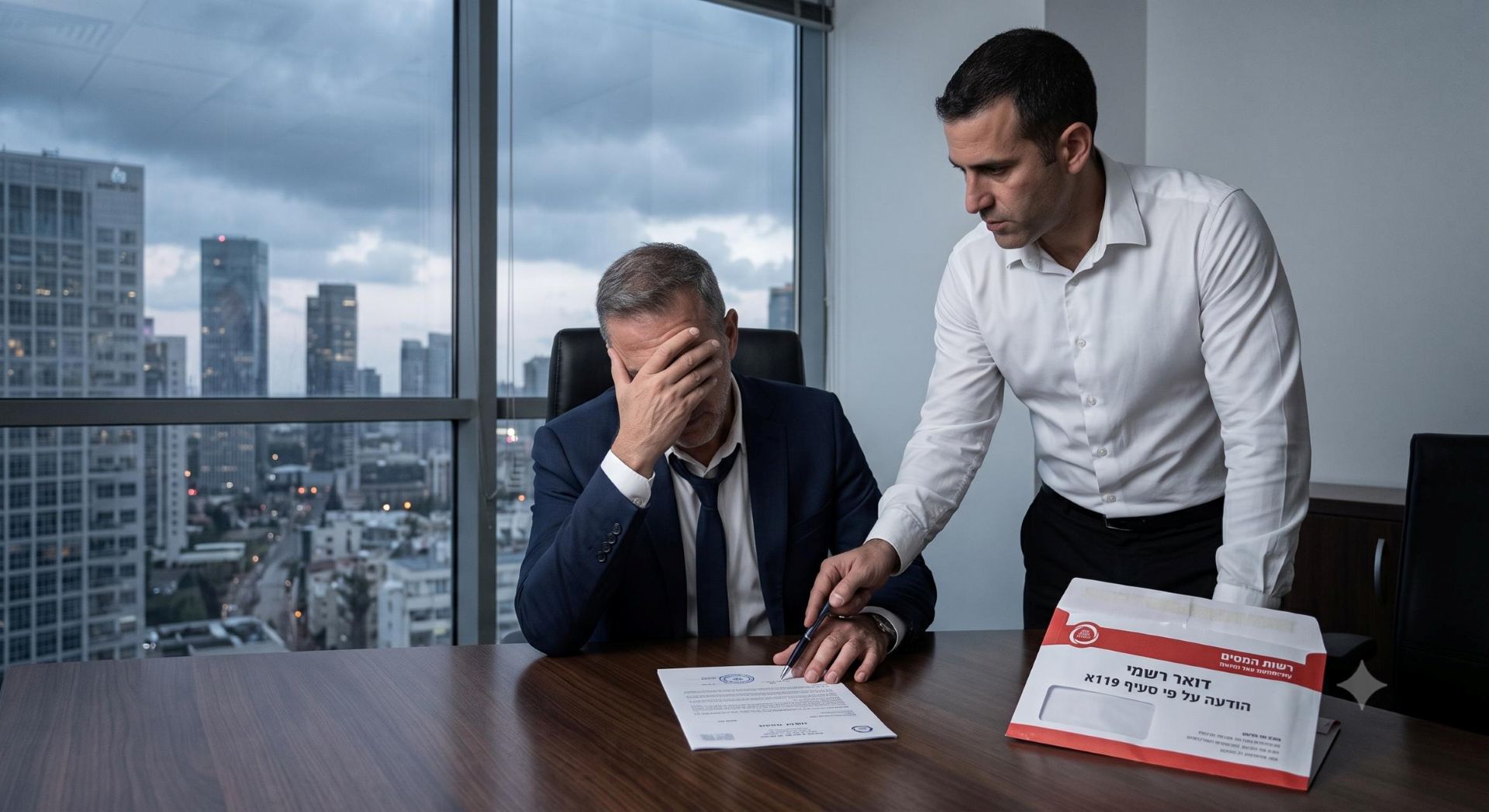
VAT refunds for bad debts are a central issue in the work of business owners in Israel. Any business owner who conducts transactions with unpaid customers may find themselves required to refund VAT paid on a bad debt. VAT refunds, which are essential for many businesses, are subject to the provisions of the Value Added Tax Law, 5736-1975, and its regulations, which determine the conditions for refunds.
The normative framework
The legal basis that regulates the field of VAT refunds in Israel is the Value Added Tax Law, 5736-1975 (hereinafter: “VAT Law”). Section 49 of the VAT Law allows for the correction or cancellation of a tax invoice when the transaction did not take place, was canceled, or in cases of an error in the invoice. This section specifically refers to cases where the customer has not paid the consideration or has not paid the full amount.
In accordance with the provisions of Regulation 24A of the Value Added Tax Regulations, 5736-1976, a request for a VAT refund for a bad debt may be submitted if the request is submitted within three years from the date the tax invoice was issued. Regulation 24A(c) states that a VAT refund will only be granted when the debt has become lost, and that it must be proven that all efforts to collect it have been made by the trader, including legal actions such as execution, bankruptcy proceedings or debt cancellation in a creditors’ arrangement.
Conditions for recognizing a debt as a loss for the purpose of VAT refund
The procedure for refunding VAT for a bad debt requires compliance with certain conditions. The trader must prove the existence of the following conditions:
- Carrying out a transaction – This is a transaction between a dealer and a customer that will require the dealer to pay VAT on the transaction.
- Issuing a tax invoice – The trader must issue a tax invoice for the transaction that was carried out. This invoice serves as evidence that the transaction was carried out and VAT was paid.
- VAT payment – The VAT paid to the tax authorities for the transaction forms the basis for the refund.
- Failure to collect the consideration – it must be proven that the dealer failed to collect the consideration or that part of it was not paid.
- Making the debt a bad debt – it must be proven that the debt is not collectable, meaning that the debt was created in cases such as the customer’s bankruptcy, a debt that was not obtained through execution, or a debt that was written off in a creditor arrangement.
Submitting a VAT refund request
The application for a VAT refund for a bad debt is submitted to the VAT Administrator. The dealer must provide the following documents:- Credit Invoice – An invoice that reduces the amount agreed to be collected from the customer.
- Supporting documents – documents that prove the bad debt, for example: court rulings issued regarding the debtor, certificates from enforcement or certificates of debt settlements.
The request for a VAT refund must be submitted within a period of six months to three years from the date the tax invoice was issued, in accordance with the requirements of Regulation 24A. The regulation sets a strict time limit but allows for exceptions. In the event of special circumstances, the deadline for submitting the application may be extended.
Time Limits and Legal Flexibility
As stated, Regulation 24A(c) establishes a time limit of three years for submitting a request for reimbursement. However, the ruling indicates flexibility and the ability to extend the deadline in the event of exceptional circumstances, such as a delay in collection procedures or unawareness of the debt.In the Tzantsiper ruling (AA 3498/21) , the court ruled that the deadline for submitting a request for reimbursement can be extended in cases where the trader was not aware of the lost debt in real time, or in cases where the enforcement procedure did not yield positive results. The ruling further endorsed the principles of proportionality and flexibility that allow businesses to deal with situations in which the debt became lost after the end of the period.
Indemnity from an insurance company for a bad debt
In a recent ruling issued on February 3, 2022, the District Court accepted the appeal of Tnuva Ltd. (Case No. 39314-06-19) , which claimed that the insurance benefits it received from the insurance company for a bad debt do not negate its right to a VAT refund. In this case, Tnuva purchased a credit insurance policy, which includes coverage for lost debts related to customers who did not pay the debt.The appellant, Tnuva, marketed products to Mega, which entered insolvency proceedings in 2016. Of the 100 million NIS remaining in debt, the insurance company paid her about 85 million NIS.
The court ruled that the insurance benefits do not constitute a “payment of consideration” for the transaction, and therefore this does not deny the appellant’s right to a VAT refund on the lost debt. Even if indemnity was received from the insurance company, it must be recognized that the debt remains lost, and that the appellant’s right to a VAT refund is preserved.
Practical implications and taxation policy
The practical implications of this interpretation are critical for business owners who can rest assured that receiving indemnity from an insurance company will not deprive them of the right to a VAT refund for bad debts. In addition, it should be understood that in cases where the debt has become bad, there may be a right to a VAT refund even if the customer did not pay the consideration but received indemnity from an insurance company.Interpretation Directive 2/2012 of the VAT Administrator states that if the dealer succeeds in collecting the consideration (all or part of it) from any party, including an insurance company, it should be considered liable for tax at the time of receipt. However, insurance benefits are not considered a transaction subject to VAT, and therefore the insurance company is not seen as a third party paying the debt.
Summary
VAT refund for bad debts is an important mechanism for businesses, but the procedure must be carried out in an orderly and precise manner, while complying with the conditions set forth in the law and regulations. The VAT refund will not be affected even if indemnity has been received from an insurance company, and the application for a refund can be submitted even if you have received indemnity for the bad debt.It is recommended that practitioners seek professional legal advice to ensure that applications are submitted at the right time and to avoid legal difficulties.
Ish-Shalom & Co. specializes in the field of civil and criminal taxation, and provides professional advice and representation to business owners in processes related to VAT refunds related to bad debts.
For more details and to schedule a personal meeting, you can contact our office.